


Hyundai EV Charging Guide: How to Charge Your Electric Vehicle
Charging a Hyundai electric vehicle can be simpler than many first-time EV shoppers expect. Whether you plug in at home overnight or use a DC fast charger during a road trip, there are several ways to keep your Hyundai EV ready for the road.
Understanding the differences between Level 1, Level 2, and DC fast charging can help you determine which charging option makes the most sense for your daily driving.
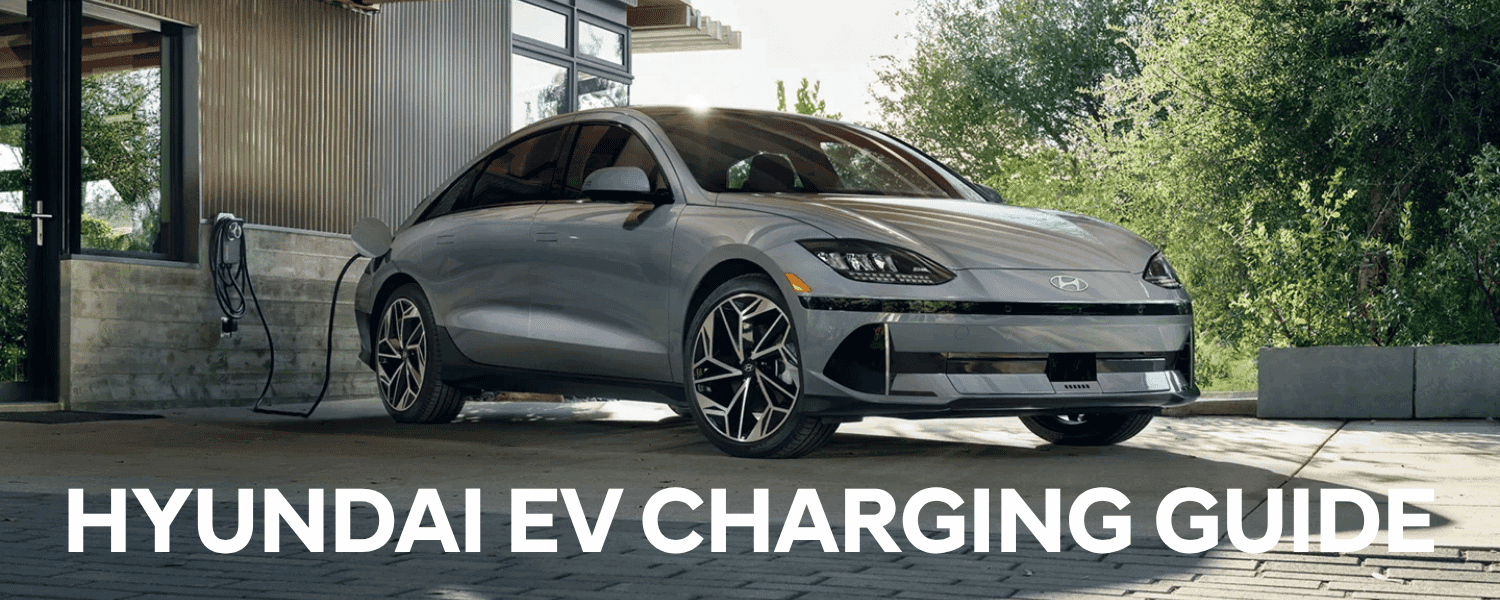
What Are the Different Types of EV Charging?
There are three primary charging levels EV drivers should know about: Level 1, Level 2, and DC fast charging.
Each provides a different charging speed and serves a different purpose.
Level 1 EV Charging
Level 1 is the most basic form of home EV charging. It uses a standard 120-volt household outlet and compatible charging equipment.
Because it uses a standard outlet, Level 1 can be convenient for drivers who travel relatively few miles each day. However, it is also considerably slower than Level 2 or DC fast charging.
For many EV owners, Level 1 works best as an occasional or supplemental charging option rather than the primary way to recharge.
Level 2 EV Charging
Level 2 charging is one of the most practical solutions for routine home charging.
A Level 2 charger typically uses a 240-volt power source and can recharge an EV considerably faster than a standard household outlet.
Many EV drivers plug in when they arrive home and allow the vehicle to charge overnight. This can make EV ownership convenient because you can begin the next morning with additional driving range without stopping at a gas station.
Level 2 chargers are also commonly found at workplaces, hotels, parking garages, shopping centers, and other public locations.
DC Fast Charging
DC fast charging, sometimes called Level 3 charging, is designed to add energy to an EV battery much faster than Level 1 or Level 2 charging.
Instead of being the primary option for everyday home charging, DC fast charging is particularly useful during longer trips or whenever you need to add substantial range in a shorter period of time.
Charging speed varies depending on the vehicle, charger output, battery temperature, current state of charge, and other conditions.
How Long Does It Take to Charge a Hyundai EV?
There isn’t one charging time that applies to every Hyundai electric vehicle.
Charging time depends on:
- Hyundai EV model
- Battery size
- Current battery percentage
- Charging level
- Charger output
- Battery temperature
- Outside temperature
- Vehicle and battery settings
As an example of Hyundai’s fast-charging capability, compatible IONIQ models can charge from approximately 10% to 80% in around 20 to 24 minutes using certain high-powered DC fast chargers under ideal conditions.
For everyday charging, Level 2 charging typically takes several hours and is often best suited to overnight use.
Can You Charge a Hyundai EV at Home?
Yes. Hyundai electric vehicles can be charged at home with compatible charging equipment.
Drivers can use Level 1 charging where supported, but many EV owners choose a Level 2 home charger because of its faster charging speed.
A home Level 2 charger can be particularly convenient if you have a garage or dedicated parking location where charging equipment can be installed.
Because electrical systems vary from home to home, installation of Level 2 equipment may require evaluation and installation by a qualified electrician.
Can Hyundai EVs Use Tesla Superchargers?
Hyundai has begun transitioning its electric vehicles in North America to the North American Charging Standard, or NACS, expanding charging options for Hyundai EV drivers.
Charging compatibility depends on the model, model year, charging port, station, and whether an appropriate adapter is required.
For example, the IONIQ 5 became the first Hyundai model offered with a native NACS port. Hyundai has also provided NACS charging solutions for certain earlier CCS-equipped EVs.
Before using a charging station, drivers should confirm that the station and connector are compatible with their specific Hyundai EV.
How Do You Find Public EV Charging Stations?
Public charging stations can be found at locations such as:
- Shopping centers
- Hotels
- Parking garages
- Highway travel areas
- Restaurants
- Office buildings
- Dedicated EV charging locations
Hyundai’s connected services and compatible navigation tools can help drivers locate charging stations while traveling.
Charging-network apps can also provide information about charger locations, availability, connector types, and charging speeds.
Should You Charge Your EV Every Night?
You don’t necessarily need to charge an EV every night.
How frequently you plug in depends on how much you drive, your remaining battery level, your available charging options, and your upcoming travel needs.
Drivers with home charging may choose to plug in regularly so the vehicle is ready when needed, while drivers with shorter commutes may be able to go several days between charging sessions.
Why Does DC Fast Charging Slow Down?
EV charging doesn’t always occur at one constant speed.
A vehicle may accept its highest charging rate during certain portions of the charging session and then reduce the charging rate as the battery becomes fuller.
Battery temperature, charger capability, weather, state of charge, and other factors can also affect charging performance.
This is one reason EV manufacturers commonly reference 10% to 80% charging times when discussing DC fast charging rather than the time required to reach 100%.
Hyundai EV Charging FAQs
What is the best way to charge a Hyundai EV at home?
For many drivers, a compatible Level 2 charger provides the best balance of convenience and charging speed for routine home charging.
Can I plug a Hyundai EV into a regular outlet?
Compatible Hyundai EVs can use Level 1 charging with appropriate equipment and a standard 120-volt outlet. Level 1 charging is significantly slower than Level 2 charging.
What is the fastest way to charge a Hyundai EV?
A compatible DC fast charger provides the fastest charging option. Maximum charging speeds depend on the Hyundai model and charging equipment.
Do I need to charge my EV to 100% every day?
Not necessarily. Your charging routine can depend on daily mileage and upcoming travel needs. Consult the recommendations in your vehicle’s owner’s manual for information specific to your Hyundai EV.
How much does it cost to charge a Hyundai EV?
Charging costs vary based on electricity rates, battery size, charging network, location, and whether you charge at home or at a public station.
Can I take a Hyundai EV on a road trip?
Yes. Hyundai EVs can use compatible public charging stations during longer trips. Planning charging stops based on your route, vehicle range, and available charging stations can make longer-distance EV travel easier.
Learn More About Hyundai Electric Vehicles
Charging is only one part of choosing the right EV. Explore our Hyundai EV resources to learn more about range, features, trims, and available electric models.